
Industrial Insulation
- Sandblasting / Painting
- Industrial Insulation
SANDBLASTING / PAINTING
Surface Preparation and Painting: İZKAR Machine
Sandblasting
Surface treatments include procedures called sandblasting and painting, which play a significant role in industrial applications. Sandblasting is a mechanical process performed to remove oxide layers, organic and inorganic contaminants, oil, slag, old paint, or coatings from a surface, while also achieving a specific roughness. This process involves impinging various materials (e.g., fine sand, silica sand, plastic, grit, and steel shot) on the surface under high pressure. This effectively removes unwanted layers and creates an ideal surface for the new coating material. The primary goal is to extend the life of the sandblasted surface and increase its durability.
Sandblasting results in a surface finish that is generally classified and measured according to Swedish standards. These classifications include standards such as SA1, SA2, SA2.5, and SA3. These standards define the specific characteristics and quality of the resulting surface.
Material selection is a key factor in sandblasting. The choice of materials, such as fine sand, silica sand, plastic, crete, and steel shot, is determined by the type of surface and the material to be cleaned. Parameters such as sand particle size, pressure level, and application time are also important factors in determining the effectiveness of the sandblasting process.
While sandblasting is generally applied to metallic surfaces, it can also be successfully applied to a variety of surfaces, such as marble, concrete, glass, and wood, depending on the materials used in different industrial sectors.
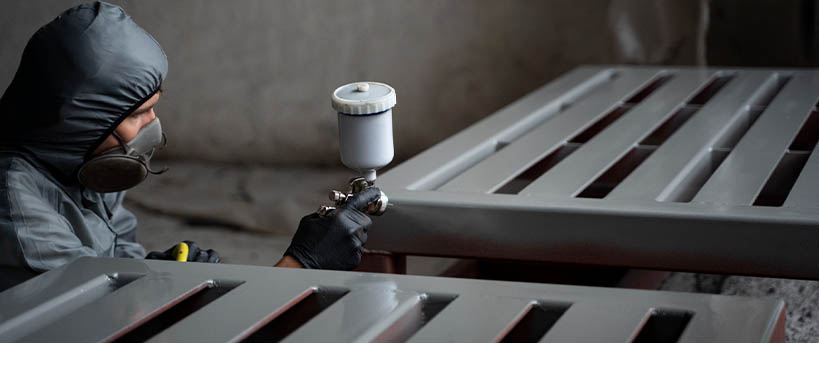
Sandblasting is used not only to clean the surface but also to prepare it for painting. Sandblasting is followed by painting to protect the surface from the negative effects of oxides, moisture, and other foreign matter. Painting is a key element in extending the life of the surface and is carried out using appropriate materials and application methods on a properly prepared surface. The painting process generally varies depending on specific specifications and details and includes different application steps, such as primer, intermediate coat, and top coat. Painting, performed using a pressure gun or hand tools (brush, roller, etc.), is important for enhancing the aesthetic and protective properties of the surface.
Sandblasting Materials
Silica: A very fine variety of silica sand, it is generally used when lightly sanding thin sheets.
Basalt: This sand, which can be considered low-dusting, is generally used in enclosed spaces where the sand can be recycled.
Grit: Also known as sandstone. It is the type of sand with the least dusting and the best sanding power. It is not actually sand, but iron waste.
Painting
Painting is performed to protect the surface, which has been sandblasted or specially prepared, from oxides, moisture, and other potentially harmful substances. This step is a perfect complement to the sandblasting process, extending the surface’s life, improving its aesthetic appearance, and increasing its durability. Paint is applied to a properly prepared surface using materials that meet specific industry standards and specialized application methods.
The painting process involves selecting various materials based on different surface types and application requirements. These materials are generally used in three main stages: primer, intermediate coat, and top coat. Primer is a layer that helps smooth and clean the surface before coating. Intermediate coats are often applied to provide additional durability and enhance color uniformity. The top coat is the final layer that provides the desired color, gloss, and protection to the surface.
Painting application is generally carried out in accordance with industry standards, project specifications, and details. This determines the type of paint to be used, application methods, number of layers, and other important parameters. This application, usually carried out using a pressure gun or hand tools (such as a brush or roller), is carefully planned to ensure a uniform coating across the surface.